Anime Archives

Disclosure: "As an Amazon Associate I earn from qualifying purchases." Read more

CereCere / Sailor Ceres Sailor Moon Trivia

Friday, June 20, 2014
Do you know where CereCere got her name? Do you know what it means? What interesting trivia is there about the Sailor Moon anime and manga character called CereCere or Sailor Ceres?

sailor moon, anime, manga, naoko takeuchi, cerecere, sailor ceres, amazoness quartet, asteroid senshi
CereCere is a member of what is known as the Amazoness Quartet. She is the eldest of the four sisters that make up said quartet, which thus makes her the group's leader. As the eldest and the leader, she also comes across as the most mature, which can be seen in the way she speaks, acts and even in the way she dresses.

She is the one with the pink hair, but it should be noted that, unlike the rest of her sisters who each only have one theme, it can be said that CereCere has two color themes, which are pink and yellow.

This is because she has the yellow Amazon stone or orb and part of her outfit has yellow hues as well.

The reason for this dual colored-theme could very well be because CereCere is supposed to be the counterpart of Sailor Venus who has a yellow theme.

But what about the name CereCere? Where did it come from? To explain this, let's first take note of the real truth about the Amazoness Quartet, which we will find in the Sailor Moon manga by Naoko Takeuchi. This truth is that the 4 sisters are really Sailor Senshi and they are collectively known as the Sailor Quartet or the Asteroid Senshi.

As a Sailor Senshi, CereCere is known as Sailor Ceres. As you can see, the name "CereCere" was derived from the name "Ceres". But what is Ceres then? Where did this name come from?

The character CereCere or Sailor Ceres was actually named after an asteroid called Ceres. This also explains why she and her sisters are collectively referred to as the Asteroid Senshi (her sisters have also been named after asteroids).
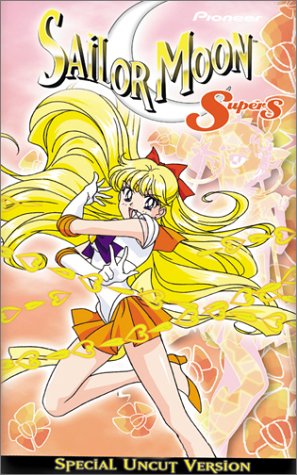
sailor moon supers, anime, manga, cerecere, amazoness quartet, sailor ceres, asteroid senshi
The asteroid Ceres got its name from the Roman goddess with the same name, so it can also be said that CereCere was named after this goddess.

In Greek Mythology, the counterpart of said Roman goddess is known as Demeter. She is the goddess of grains, agriculture, harvest, etc.

Flowers and plants were also associated with Demeter, which could thus explain why CereCere is known as the Flower Magician and why her powers involve the ability to manipulate flowers and plants. In fact, CereCere usually summons plant or flower-based Lemures.

While in disguise, CereCere usually dresses in very feminine outfits and clothes that make her look rich and which also seems to highlight her beauty (perceived or otherwise).
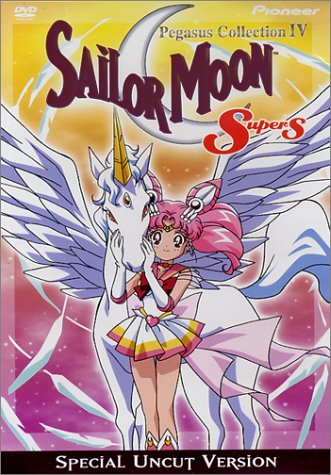
sailor moon supers, cerecere, anime, manga, amazoness quartet, sailor ceres, asteroid senshi
A good example of this can be seen in episode 156 of the Sailor Moon SuperS anime where CereCere has her portrait painted by an artist.

In this episode, we can really see how she values her beauty and how she has a high opinion of her looks, so much so that she asks the painter to draw her again when the initial portrait fails to impress her.

This very high regard for her beauty and looks can be attributed to her association with Sailor Venus, or, to be more precise, it's due to Sailor Venus' namesake.

This would be the Roman goddess of love and beauty whose Greek Mythology counterpart is called Aphrodite. So what do you think of Sailor Ceres or CereCere? Is she your favorite member of the Amazoness or the Sailor Quartet? Do you think her name fits her?

*Notes:
- Image with added text was modified by Freya Yuki (CC:BY-SA) based on the image by hayashinomura (CC:BY-SA) from deviantArt
- Pic is meant to symbolize CereCere because the figure also has pink hair and she even appears mature and elegant like Sailor Ceres
- The rest of the pics are enlarged product images from Amazon.com; links shown above via Amazon's Native Shopping Ads widget

The Agent Of Force - Mars Yu-Gi-Oh! Card Game Trivia

Saturday, June 07, 2014
agent of force, mars, yu-gi-oh card, anime, game
What trivia is there about The Agent of Force - Mars, one of the many cards in the Yu-Gi-Oh! card game?

What is so significant, meaningful and symbolic about it?

The aforementioned Yu-Gi-Oh! card is a level 3 Fairy-type with a Light-attribute.

You can see what it looks like and what its effect is via the image featured to the right.

Let's start with the origin of its name. This is actually part of "The Agent" archetype of cards. These cards all have "The Agent" as part of their name as well as the name of a planet and something that they're governing or being the agent of.

For instance, in this card's case, Mars is the agent of force. Another example of this archetype is the card called The Agent of Judgment - Saturn. Okay, let's get back to the "force" part. This term is actually very fitting and appropriate for the card in question considering who Mars is.
trivia, anime, game, yu-gi-oh, agent of force, mars, card
Mars is the name of the Roman god of war. The god Ares from Greek Mythology is his counterpart. Mars is also the name of the fourth planet from the sun, the Red Planet. The planet itself was named after the war god precisely because of its red color, which can easily be associated with blood, war and fighting. This is also the reason why the card itself has a red theme or motif.

ares, greek, roman mythology, mars, god of war, red planet
If you look at the image of this card again, you can see what appears to be a big red circle or rock in the background. This is meant to represent Mars, the Red Planet.

The person on the image is, of course, meant to represent Mars, the god of war. This is the reason why said person looks very muscular, strong and powerful.

The way he looks really screams "war god," doesn't it? He even has a weapon and his face and very stance looks fierce and defiant.

He easily gives off an air of "do not mess with me". The effect of this card just reiterates and reinforces what we can glean from the looks of the image.

But, at first glance, if you just look at the attack and defense of this card, which are both zero, it really doesn't seem like it can be of any use. However, upon reading the effect of this card, we can see right away that The Agent of Force - Mars has the potential to be very powerful, given the right conditions.

Just imagine if The Sanctuary in the Sky is on your side of the field and there is such a huge difference between your life points and that of your opponent's. If that's the case, you can get a one-hit kill and be able to instantly defeat your opponent thanks to Mars.

sanctuary in the sky, agent of fore, mars, yu-gi-oh, card game, anime
This is indeed very fitting when you take into consideration that the god Ares in mythology is known as being powerful, fierce, brutal and warlike.

As the war god, it's only natural that Ares likes fighting and slaughtering. He represents the violent side of war.

But it is the Greek goddess of wisdom Athena (Minerva in Roman Mythology) who represents the strategic side of war, which explains why Ares is not exactly all that capable.

What this means is that, while he is dangerous and very powerful, he isn't wise at all.

This explains the constraints of the card and why it needs The Sanctuary in the Sky to power it. The Sanctuary can represent the money, resources and support that is needed in order to win a war.

Without the aforementioned field spell card, The Agent of Force - Mars is pretty much useless, considering its 0 attack and defense. Sure, it won't be affected by spell cards but what good will that do if any monster card can easily send it to the graveyard?

Furthermore, The Sanctuary in the Sky isn't the only thing you'll need to have if you want to power up Mars. You'll need a very high amount of life points as well. This can be likened to the god Ares who is actually not all that brave and courageous. He's pretty much a coward actually.

This can be seen in what happened during the Trojan War as mentioned in The Iliad by Homer wherein the hero Diomedes, who is a very good and capable warrior and fighter, attacks Ares.

greek, roman mythology, athena, ares, mars, violent versus strategic side of war
Thank to Athena, the hero Diomedes
was able to injure the god Ares (Mars)
Diomedes was actually under the goddess Athena's protection, and, when he fought against Ares, Athena made sure that his attack would not miss and that he would not be harmed.

Because of that, Diomedes was able to injure Ares. When that happened, Ares displayed his cowardice by crying loudly at the pain and then running back to Mount Olympus, the realm of the gods.

This can thus explain the Mars card's reliance on the field spell card in question.

When The Sanctuary in the Sky falls and when your life points fall, Mars essentially becomes useless and this is how the god's cowardice and weakness is manifested as he can now be defeated easily.

But, if you manage to protect and even increase your life points as well as ensure that the Sanctuary remains on your side of the field, then The Agent of Force - Mars can really be a force to be reckoned with that can help you win matches and beat your opponents. What do you think of this particular card? Do you make use of it when playing the Yu-Gi-Oh! card game?

*Notes:
- Image with added text was modified by Freya Yuki based on the image by Peter Paul Rubens (Public Domain) from Wikimedia Commons
- Pic shows the Roman god Mars
- The rest of the pics are enlarged product images from Amazon.com; links shown above via Amazon's Native Shopping Ads widget

Ragnarok: Into The Abyss Manhwa Review

Friday, May 30, 2014
myung jin-lee, ragnarok: into the abyss, manhwa, chaos, fenris fenrir, review
What can be said about the Ragnarok: Into The Abyss manhwa by Myung Jin-Lee?

Should this series be recommended? What review rating can be given to this comic?

This is a review for all 10 volumes of the manhwa series. However, this will only be a collated overview of the entire series.

The things mentioned here are discussed in greater detail in the many other articles about Ragnarok: Into The Abyss, which you can find by checking out this tag. With that out of the way, let's get started with the review.
ragnarok: into the abyss, manhwa, myung jin-lee, review
First of all, the Ragnarok series is not that bad. It's actually a pretty okay graphic novel, but it's not perfect. It's far from perfect actually and it's not without its flaws. Let's take a look at some of the comic's pros and cons (in no particular order).

Pros:

1. Awesome Art

Seriously, the art in this manhwa is really very good. The characters are all very nicely-drawn including the sceneries and landscapes and the like. Simply put, the comic is nice to look at thanks to its awesome art.

2. Interesting Storyline / Plot

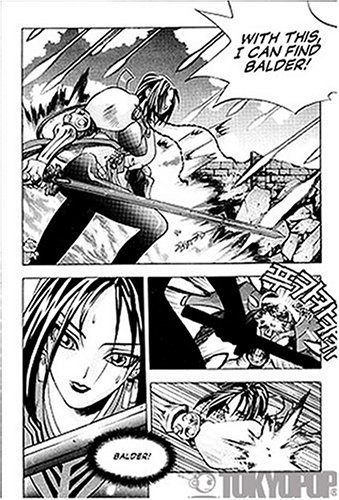
ragnarok: into the abyss, manhwa, myung jin-lee, fenris fenrir
The woman in this image
is Fenris Fenrir, arguably one
of the best characters in the
Ragnarok manhwa
The storyline or plot of the graphic novel is quite interesting.

The fact that it's based on Norse Mythology just makes it all the more fascinating. This is especially the case for all those who find reading about Norse Mythology appealing.

For mythology fans, that's one good reason to want to read this manhwa.

But even those who aren't really into mythology or don't really know anything about said topic can still enjoy this comic if they like fantasy, magic and fight scenes.

3. Some Good Characters

There are some good characters with appealing personalities that just make readers root for them and want to get to know them more. Examples would be Fenris Fenrir, Loki, Frigg and the Norns (Urd, Verdandi, Skuld).

The aforementioned characters are all very likable that it really makes one wish there were more scenes involving or featuring these people. It also makes one wish that we got to know them even more.

4. Good Magic System

The graphic novel has a pretty cool magic system. There are a lot of different spells and rituals and weapons and the like as characters show off their moves and fight against each other. It makes those interested in these kinds of things want to find out more about the magic system in the comic and learn how it works.


Cons:

1. Pages Of Art And No Dialogue

ragnarok: into the abyss, myung jin-lee, manhwa
Pages of no dialog disrupt the
flow of the story, bringing the
plot to a stand still
Yes, I know. I just said that the manhwa's art was awesome and it is. That hasn't changed at all.

But who says that you can't enjoy both the comic's art and plot at the same time?

Readers can still appreciate the graphic novel's finely-drawn art even with dialogue blocking some of the drawings.

So there should be no reason why there has to be many pages where we see nothing but art and more art (such as sceneries and landscape shots and even fight scenes) with no words being spoken, and, sometimes, with nothing much happening at all.

All this does is bring the plot to a stand still and annoy readers who want to know what happens next already without all these unnecessary and needless interruptions.

2. Prolonged And Never-Ending Fight Scenes

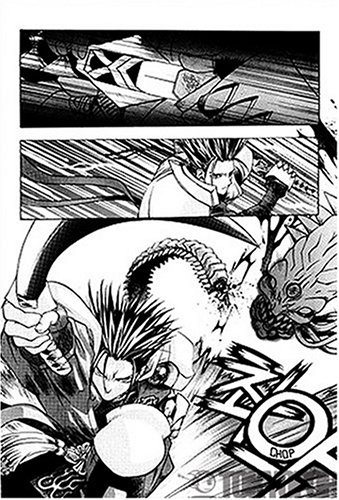
ragnarok: into the abyss, manhwa, skurai, loki, chaos, myung jin-lee
Those who like fight scenes might not see this as a con unless they also don't like prolonged fight scenes that never seem to end.

There's definitely a lot of that in the Ragnarok series. Many fight scenes take so long to end that it also brings the story to a stand still because the plot isn't advanced as we focus on nothing but fights between the characters.

This can annoy those who just want the fight to end already, so we can move on with the plot.

Examples of very long fight scenes include the one between Loki, Chaos and Skurai as well as the one between Chaos and Himmelmez.

3. Telling Instead Of Showing

There are many instances in the manhwa where there was more telling instead of showing, and, sometimes, all telling and no showing. There are times where we get told things in the previews or the summaries or the 'story so far' instead of in the comic proper itself.

For example, we are told about the shards of Ymir's Heart and how Freya wants this and how she sent Himmelmez to get this in one of the comic's previews and summaries. Things like that should be introduced and showed to us when we're reading the graphic novel itself, not told in this way because it ruins the flow of the story.

4. Some Annoying Characters

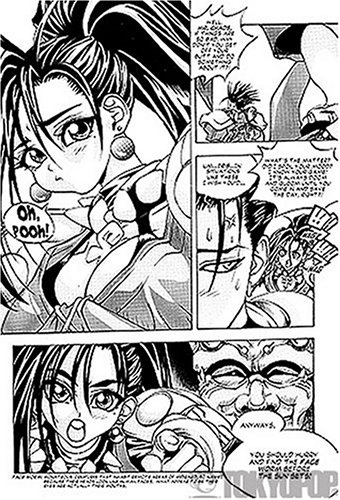
ragnarok: into the abyss, manhwa, myung jin-lee, iris irine
Not all characters are awesome and likable, unfortunately. There are some that can be quite annoying at times and some that are not exactly likable.

For example, Iris Irine can act childish and immature at times pretty much most of the time and she can be quite really unlikable. She likes clinging to Chaos and acting like such a brat.

But then there are a few times where she shows that she's actually capable of being mature and even likable such as when she shows off her skills and abilities, making one wonder as to the reason for this inconsistency.

5. Some Confusing Parts

ragnarok: into the abyss, manhwa, freya, goddess, norse mythology, myung jin-lee
Yes, the plot's pretty interesting, but it's also true that there are many confusing things about it.

There are many things that we wonder about and want to know about, but these things aren't explained to us clearly and some aren't explained to us at all.

For example, we know that Freya is supposed to be the bad guy, but we don't know why she has to be the villain and antagonist and why she's doing what she's doing.

The events that happened 1000 years ago keep being alluded to and there are some explanations, but it's still very much a mystery as to what exactly happened during that time. One thing is for sure though: the Freya in the Ragnarok manhwa is very much different from the goddess Freya in Norse Mythology.

Of course, there's absolutely nothing wrong with that since the comic is only loosely based on mythology anyway. It's perfectly fine even if the characters are different from their counterparts (like Freya being the villain). The problem is that Ragnarok doesn't explain anything to us like we're just expected to go with the fact that Freya's the villain and that's that.


6. Instances Of Deus Ex Machina

ragnarok: into the abyss, manhwa, fenris fenrir, bijou, iris irine, myung jin-lee
There are quite a number of scenes in the Ragnarok series that can be classified as or said to be deus ex machina and that's not a good thing at all.

A deus ex machina makes scenes unbelievable and even contrived.

An example is when Sara Irine was the one who ended up defeating both Bijou and Himmelmez even though she was supposed to be on their side.

This seemed to have come from out of nowhere since the main characters were losing against their opponents and probably would have been soundly beaten had it not been for the appearance and interference of a deus ex machina in the form of the aforementioned Valkyrie.

7. Incomplete / Unfinished Series

ragnarok: into the abyss, manhwa, myung jin-lee
Ragnarok: Into The Abyss consists of 10 volumes, but, even with that many volumes, the series remains incomplete and unfinished, unfortunately.

While some may not mind that the series isn't complete, others will surely want closure and will want to know how the conflict is resolved and how the story ends.

It's too bad that we get nothing but a cliffhanger because Volume 10 ends in one.

The entire series just abruptly stops and it doesn't look like it will ever be continued, at least not anytime soon. It's quite disappointing, really, no?

Review Rating

Ragnarok: Into The Abyss Manhwa
Reviewed by Freya Yuki on May 30, 2014
Rating: 2

Overall, I give the Ragnarok: Into The Abyss manhwa series a 2 out of 5 stars (below average). The comic could have been so much better, but, then again, it could have been worse. It has its pros, but it also has a lot of cons, which led to its low score.

ragnarok: into the abyss, manhwa, myung jin-lee, loki, chaos
The fact that the series is unfinished and incomplete also added to its low rating.

Truthfully, the graphic novel had a bit of a rough start, but things seemed to go pretty well and it wasn't that bad at all as the story was quite enjoyable though its inconsistencies and flaws lessened that a bit.

However, things seemed to go downhill when the Himmelmez arc ended and some of the characters had a makeover where their clothes and even hairstyles were changed.

With that, it seemed like the comic itself underwent a makeover and it wasn't for the best.

Again, for more details, you can check out the Ragnarok tags. The rest of the articles on this series discusses everything else in great detail including what the problems might be, what could be wrong with some scenes, the instances of deus ex machina in the comics, etc. So, what about you? How would you rate this series? Do you agree with the given rating? Why or why not?


*Notes:
- Image with added text was modified by Freya Yuki based on the image by Friedrich Wilhelm Heine (Public Domain) from Wikimedia Commons
- Pic shows Ragnarok happening in Norse Mythology, which the aforementioned manhwa series is loosely based on
- The rest of the pics are enlarged product images from Amazon.com; links shown above via Amazon's Native Shopping Ads widget